Where to Buy Landscape Photography Prints in 2026
Editorial Team · October 2, 2026
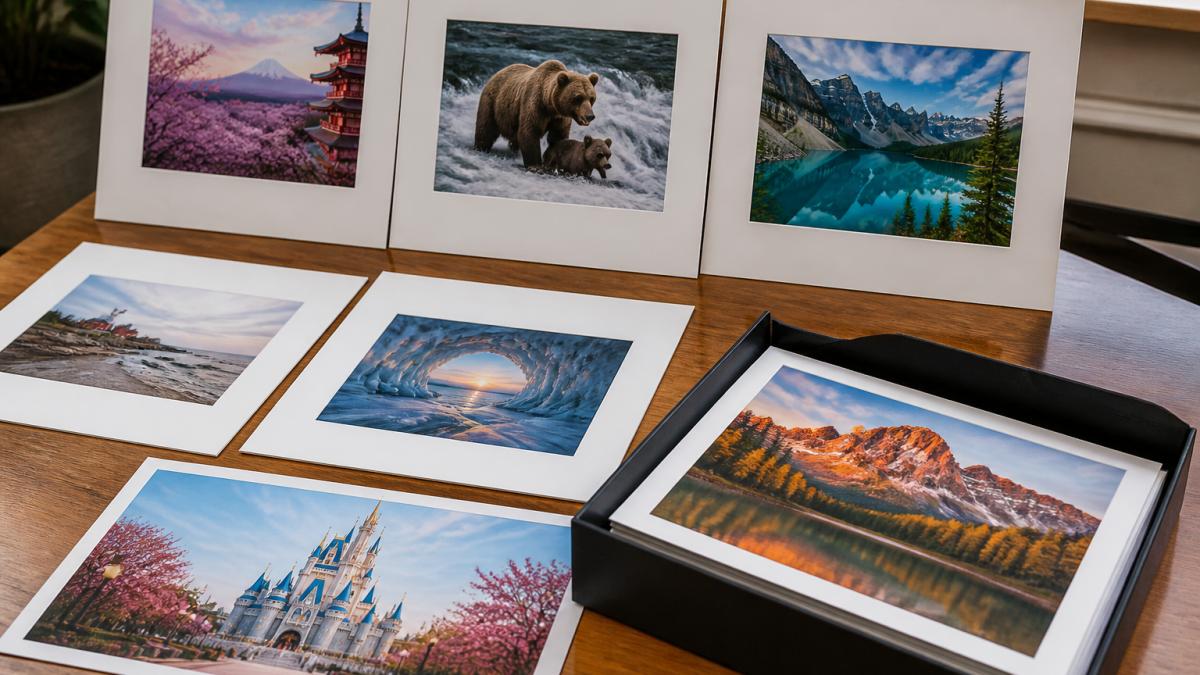
Table of Contents
- Where to Buy Landscape Photography Prints: Direct From the Photographer vs. Marketplaces
- Fine Art Landscape Photography Prints: What Separates Gallery Quality From Mass-Produced Wall Art
- Print Medium Comparison: Paper, Canvas, Metal, and Acrylic
- Limited Edition vs Open Edition Prints: Which Fits Your Goals?
- How to Choose Wall Art for Your Home: Size, Finish, and Placement
- Pricing Breakdown: What You're Actually Paying For
- Shipping, Framing, and Mounting Options
- Authenticity, Archival Standards, and Licensing
- Frequently Asked Questions
Last Updated: October 2, 2026
Where to Buy Landscape Photography Prints: Direct From the Photographer vs. Marketplaces
Landscape photography prints are physical or digital reproductions of scenic photographs, sold either directly by the photographer or through third-party marketplaces. Where you buy determines print quality, the paper or metal it lands on, and whether the piece holds value. This guide from Brian Farber Photography walks through every buying route.
Buying a landscape print is not the same as buying a poster. A poster is disposable decor; a fine art print is meant to hang for years, and the source changes how it looks on your wall.
Marketplaces win on convenience and price; buying direct wins on quality control, authenticity, and rarity. Below, we compare both routes, print mediums, and common mistakes.
U.S. Copyright Office guidance on reproduction rights
Direct-from-Photographer Sales
Buying direct means you purchase from the person who pressed the shutter.
The photographer controls color grading, paper selection, and print verification, and you often get a signature, a certificate of authenticity, and a direct line for questions.
The trade-off is volume: one photographer can't match a marketplace's catalog. But you're shopping for a specific image no one else prints the same way.
Online Marketplaces and Print-on-Demand
Marketplaces and print-on-demand services let anyone upload a file and sell it as wall art, offering huge selection and fast turnaround.
The catch is quality variance. Each of thousands of sellers manages their own files and color profiles, so two listings of the same scene can deliver wildly different results, and you rarely know if the "photographer" actually shot the image.
For casual decor that's fine; for a collector, the lack of accountability is the problem.
Fine Art Landscape Photography Prints: What Separates Gallery Quality From Mass-Produced Wall Art
Gallery quality comes down to resolution, color accuracy, and print standard. Fine art landscape photography prints use high-resolution files, color-managed end to end, and pigment-based inks on archival media. Mass-produced wall art skips at least one step.
Resolution, Color Accuracy, and the Giclée Standard
Giclée is a French term for a fine art print made with pigment-based inkjet printers at high resolution.
Color accuracy is the other half. A photographer who calibrates their monitor and uses a color-managed workflow can match what you see on screen to what arrives at your door, the number one complaint from online print buyers, and entirely preventable.
Don't assume all "high resolution" claims are equal: a file can be large and still be soft, oversharpened, or poorly color-graded.
Print Medium Comparison: Paper, Canvas, Metal, and Acrylic
Most listings show a thumbnail and a dropdown, never mentioning that the same landscape file on metal and on cotton rag looks like two different photographs. This comparison decides whether you love the piece in five years.
Each medium changes how an image feels in a room: paper reads traditional and detailed, canvas warm and painterly, metal modern and vivid, acrylic glossy and gallery-like. The differences go deeper than mood.
| Medium | How a Landscape Renders | Finish Options | Archival Outlook | Handling Notes |
|---|---|---|---|---|
| Fine art paper (cotton rag, baryta) | Highest detail; deep matte blacks; texture visible up close | Matte, satin, glossy | Excellent when framed behind glass with an acid-free mat | Must be framed; prone to surface scuffs and moisture |
| Canvas | Softens fine detail; emphasizes color and atmosphere | Matte texture, optional varnish | Good; varnish adds UV and moisture resistance | Gallery wrap needs no glass; can sag over time if poorly stretched |
| Metal (dye-sublimation on aluminum) | High contrast and saturation; whites glow; detail slightly softened | Glossy, satin, mid-gloss | Very good; scratch and moisture resistant | Rigid, ships with a float mount or cleat; not ideal for very warm rooms |
| Acrylic (face-mounted or direct print) | Deepest apparent blacks; colors appear to float | Glossy, sometimes matte overlay | Good; acrylic can scratch and attracts dust | Heaviest and most fragile in transit; needs careful cleaning |
How to Pick a Medium for a Specific Landscape
The subject should drive the choice, not the trend.
- High-detail scenes, rock textures, frost patterns, dense forest, reward fine art paper, where the surface holds micro-contrast.
- Wide panoramas and atmospheric scenes, coastlines, fog, desert horizons, suit canvas, which hides seams and reads well at large sizes without glass.
- High-contrast scenes, storm light, night skies, snow against dark rock, suit metal, which pushes separation between tones.
- Bold, saturated color, sunsets, autumn foliage, suit acrylic, which amplifies apparent depth.
Many collectors start with paper, then add metal or acrylic once they know how their room's light behaves.
Custom Dimensions and Panoramic Formats
Standard sizes rarely fit a specific wall. Custom dimensions let you match a print to the space instead of hunting for furniture that fits the art.
Panoramic formats suit wide scenes like coastlines and mountain ranges. Aspect ratio matters: a 3:1 panorama at 12 inches tall becomes 36 inches wide, changing framing cost and shipping method. For an awkward wall, ask the photographer about custom sizing before settling for a standard frame.
Framing and Mounting by Medium
- Paper: frame behind glass with an acid-free mat; avoid direct sunlight.
- Canvas: gallery wrap needs no frame; a floater frame adds a finished edge.
- Metal: float mount or cleat keeps the panel off the wall and casts a subtle shadow.
- Acrylic: usually arrives ready to hang with a French cleat; clean only with a soft, damp cloth.
Limited Edition vs Open Edition Prints: Which Fits Your Goals?
Limited edition prints are capped at a fixed number of copies; open editions can be reproduced indefinitely. That difference drives price, resale potential, and how the piece feels to own.
Limited editions usually come numbered and signed, giving collectors a reason to buy. Open editions cost less and let you order the exact size you want.
Neither option is wrong. It depends on whether you're decorating or collecting.
How to Choose Wall Art for Your Home: Size, Finish, and Placement
Choosing wall art starts with scale, not style.
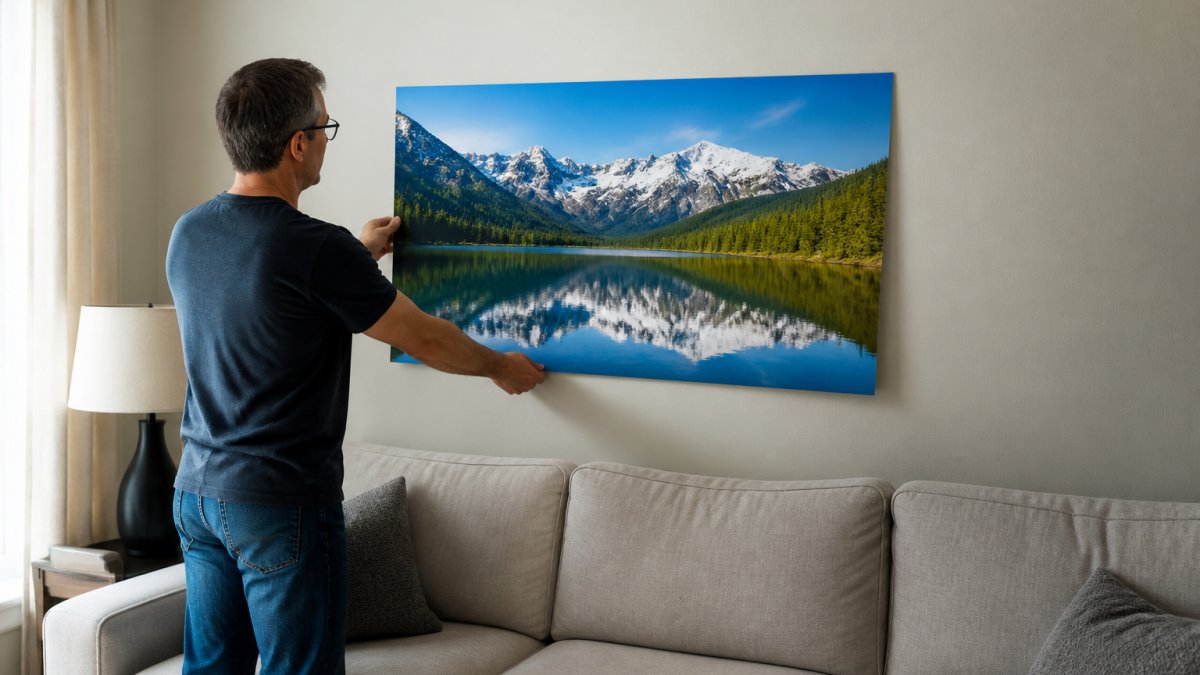
Finish matters too: matte cuts glare in bright rooms, while glossy boosts contrast and color. In a home office, a calming matte landscape reduces screen glare and gives your eyes somewhere to rest.
- Measure the wall before you browse
- Match finish to the room's lighting
- Hang the center at eye level, roughly 57 to 60 inches from the floor
- Leave 2 to 4 inches between the frame and furniture below
Pricing Breakdown: What You're Actually Paying For
Print pricing reflects four costs: the image, materials, production, and shipping. A cheap print usually skimps on materials or the photographer's time, not the image.
Here's how those costs stack up, so you can read a price tag instead of guessing.
The Four Cost Drivers
- The image and the license. A fine art print carries the photographer's travel, scouting, shooting, and editing time. A stock image licensed for wall art costs the seller a few dollars, which is why marketplace prints can undercut direct sales.
- Materials. Archival cotton rag paper, baryta paper, and aluminum panels cost more per square foot than poster stock or thin canvas. Pigment inks cost more than dye inks but resist fading far longer.
- Production. Custom sizing, hand-stretching a canvas, face-mounting to acrylic, and hand-signing all add labor. Print-on-demand automation removes that labor, and the quality control that comes with it.
- Shipping. Large, rigid, or framed pieces ship in oversized boxes with padding. A 40x60 metal panel can cost more to ship than a rolled 16x24 paper print costs to produce.
How Size and Medium Move the Price
Price scales faster than size because material waste and shipping bulk grow with the piece. A few patterns hold across most fine art sellers:
- Small paper prints (8x10 to 11x14) are the entry point and the most affordable way to test a photographer's work.
- Mid-size paper and canvas (16x24 to 24x36) are the most common collector purchases and where the price-per-square-inch is usually best.
- Large metal and acrylic (30x40 and up) carry the highest per-unit cost because of panel sourcing, crating, and freight.
- Framing can add a meaningful share of the total, and framed pieces ship in larger boxes, so the shipping line grows too.
Limited vs. Open Edition Pricing
Limited edition prints are priced higher because the supply is capped and the photographer commits to never reprinting that image at that size. Open editions cost less and let you order the exact size you want without worrying about availability. The premium on a limited edition is partly scarcity and partly the signature, numbering, and certificate of authenticity that come with it.
How to Read a Price Without Getting Burned
- Compare price per square inch, not sticker price, when sizing up.
- Ask what ink and paper or panel the seller uses. If they can't answer, the price is probably hiding a shortcut.
- Factor framing and shipping into the total before you decide.
- Be skeptical of a "limited edition" that isn't numbered or tracked.
What you're really paying for with a fine art print is the years of shooting, travel, and editing behind a single image, plus archival materials that keep it looking right. A bargain print that fades in three years isn't a bargain.
Shipping, Framing, and Mounting Options
Shipping timelines depend on the medium and whether the print is made to order. Custom and large-format prints take longer than standard sizes because they're produced individually.
Framing and mounting protect the print and change its look. Common options include:
- Unframed: ships flat or rolled, cheapest, you frame it yourself
- Mounted: adhered to a rigid backing for stability
- Framed: ready to hang, adds cost and shipping weight
- Canvas gallery wrap: stretched over a frame, no glass needed
A common mistake is ordering a large print rolled and then struggling to flatten it. For anything panoramic or oversized, ask how it ships before you buy.
Authenticity, Archival Standards, and Licensing
Authenticity separates a collectible print from a decorative one. Look for a signature, a numbered edition, and a certificate of authenticity.
Archival standards matter for longevity. Prints made with pigment inks on acid-free media resist fading far better than standard photo paper.
Library of Congress guidance on archival print storage
Licensing is the other half of authenticity.
U.S. Copyright Office on reproduction and distribution rights
The hardest part of buying landscape photography prints isn't finding an image.
Frequently Asked Questions
Where can I buy landscape prints?
You can buy landscape photography prints directly from photographers' websites, through online marketplaces, or at local galleries. Buying directly from the photographer often gives you more control over print medium, custom dimensions, and edition size. It also lets you ask about archival quality and color accuracy before you order. Many photographers, including Brian Farber Photography, offer prints of locations like Japan, Alaska, Colorado, and Michigan, plus Disney-themed work.
What should I look for when buying fine art photography prints?
Check the paper or material (archival quality, giclée, or canvas), the resolution and color accuracy, and whether the print is a limited edition or open edition. Ask about the printing process and fading resistance. A reputable seller will explain the print medium and provide a certificate of authenticity for limited editions. Custom dimensions and mounting options also matter for a proper fit.
What is the difference between open edition and limited edition prints?
Open edition prints have no cap on how many are produced, so they are usually more affordable and always available. Limited edition prints are capped at a set number, often signed and numbered, which can make them more collectible and valuable over time. If you want a unique piece for your home decor, a limited edition print adds exclusivity. For a flexible, budget-friendly option, open edition works well.
Are there benefits to buying prints directly from landscape photographers?
Yes. Buying directly often means better communication about print quality, custom sizing, and the story behind the image. You can request specific finishes like matte or glossy, and you may get access to limited editions or panoramic formats not available elsewhere. Direct sales also support the artist, and you can ask about licensing versus physical prints if you need an image for commercial use. Always check the return policy and shipping timelines.